Platform comparison
| Platform | YES odds | NO odds | Fee | KYC | Settlement | |
|---|---|---|---|---|---|---|
PolyGram Pick polygram.ink |
38% | 62% | 0% (USDC on-chain) | No-KYC up to $1,500 | USDC, auto via UMA oracle | Open on PolyGram → |
Polymarket polymarket.com |
38% | 62% | 0% | Geo-blocked in US/UK/EU | USDC, on-chain | Open on PolyGram → |
Kalshi kalshi.com |
— | — | Up to 7% per trade | US-only, KYC required | USD | Open on PolyGram → |
Betfair Exchange betfair.com |
— | — | 2-5% commission | Full KYC from first trade | GBP / EUR | Open on PolyGram → |
Manifold Markets manifold.markets |
— | — | Play-money (mana) | None — play-money | Mana (no cash-out) | Open on PolyGram → |
Live odds for Polymarket-based markets come from the Polygon order book. Non-Polymarket venues show attributes only; clicking any row opens the market on PolyGram.
Market context
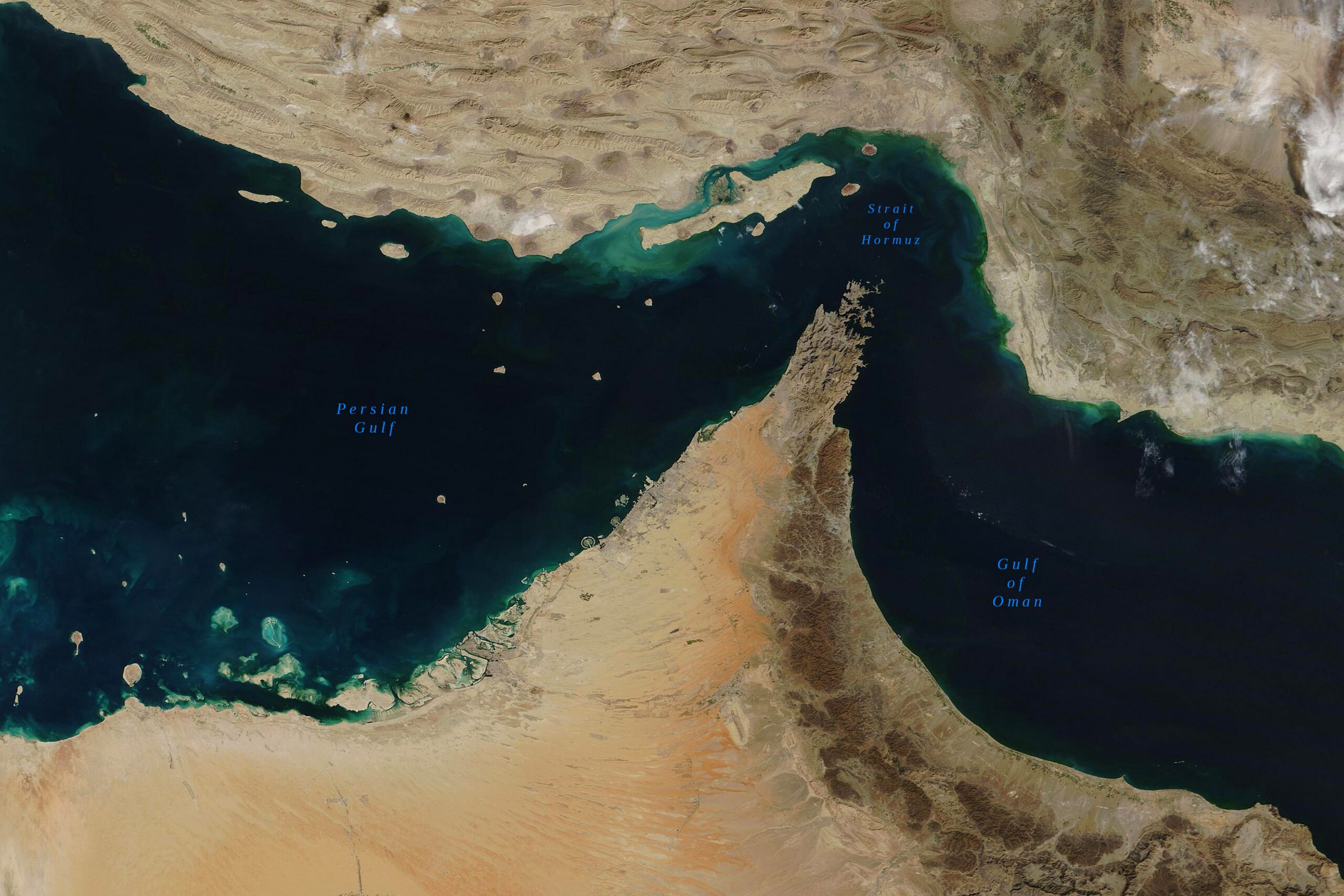
The Strait of Hormuz remains effectively closed, with commercial shipping suspended after a brief reopening on 21 April 2026, leaving over 150 vessels stranded and reducing daily transits to near zero against a normal baseline of roughly 60 ships[5]. This crisis, driven by ongoing hostilities between Iran and the United States, has severed a route carrying approximately 21% of global oil supply, causing Brent crude to surge above $100 per barrel and war risk insurance premiums to exceed 16 times normal rates[5][6]. Despite an 8 April 2026 ceasefire, the Joint Maritime Information Center confirms that commercial traffic remains at a mere trickle, with only six vessels navigating the strait in the last 24 hours[3].
Historical precedents suggest that even formal ceasefires do not instantly restore confidence; the 2026 closure mirrors past disruptions where routing uncertainty and toll demands by Iranian officials kept transits suppressed for months[3]. The crowd-implied 49% probability reflects this hesitation, as shipping executives await a definitive peace deal to ensure safe passage, while some tanker owners still weigh the extreme risk of transiting without AIS to bypass missile threats[1][2]. The market’s binary outcome hinges on IMF PortWatch data reaching a 7-day moving average of 60, a threshold currently unmet given the strait’s near-standstill status[1].
Traders must monitor the US-Iran deadlock, specifically any US naval blockade declarations or Iranian toll implementations, which could further delay reopening[3][4]. Recent reports indicate Iran has implied it may have laid mines, while the US is contemplating increased naval protection, creating a volatile dependency for any traffic recovery[4][6]. Crucially, the market’s accessibility is shaped by regulatory frameworks: German GlüStV and US CFTC reach define compliance, yet the 'no-KYC up to $1,500' provision allows traders to access this specific prediction without identity verification, bypassing typical barriers for high-risk geopolitical markets[3].
Methodology
This page reviews Strait of Hormuz traffic returns to normal by July 15? across five venues. We show live odds for Polymarket-based markets (sourced from the Polygon order book); for other venues we list platform attributes, since the comparable contracts are not exposed via a public API on every venue. Every CTA points at PolyGram — the application we operate, where you trade directly against the Polymarket order book at 0% fees.
Resolution & payout
Polymarket-based markets settle through the UMA Optimistic Oracle on Polygon. A proposer submits the outcome, a two-hour challenge window opens, and unchallenged proposals finalise the resolution. Payouts settle automatically in USDC the moment the result is final — no bookmaker, no delay.
Kalshi-based markets settle in USD via the CFTC-regulated clearinghouse. Betfair Exchange settles in GBP/EUR net of commission. Manifold is play-money and does not pay out real funds.
FAQ
- Is this market available outside the US?
- PolyGram is available in most jurisdictions where Polymarket isn't directly accessible. Polymarket itself is geo-blocked in the US/UK/EU. Always check local regulations.
- How does resolution work?
- Through the UMA Optimistic Oracle on Polygon: a proposer submits the outcome, a two-hour challenge window opens, and USDC payouts settle automatically once the result is final.
- What does it cost to trade on PolyGram?
- Zero. PolyGram routes every order to the live Polymarket order book; the only cost is the Polygon network fee, typically under $0.01 per transaction.
- How fast are USDC deposits?
- Polygon credits deposits after 12 confirmations — usually under 30 seconds. Withdrawals follow the same path and land back in your wallet within minutes.
- Do I need to KYC for this market?
- Not under $1,500 of lifetime trading volume. Above that threshold, PolyGram triggers a quick verification flow that finishes in minutes.
%22%2F%3E%3Cpath%20d%3D%22M%206%2066%20A%2026%2026%200%200%201%2058%2066%22%20fill%3D%22%23E6B98D%22%20opacity%3D%220.9%22%2F%3E%3Ccircle%20cx%3D%2232%22%20cy%3D%2226%22%20r%3D%2222%22%20fill%3D%22%23F5CBA7%22%2F%3E%3Cpath%20d%3D%22M%2010%2026%20A%2022%2028%200%200%201%2054%2026%22%20fill%3D%22%237c3aed%22%20opacity%3D%220.9%22%2F%3E%3C%2Fsvg%3E) and
and%22%2F%3E%3Cpath%20d%3D%22M%206%2066%20A%2026%2026%200%200%201%2058%2066%22%20fill%3D%22%23E6B98D%22%20opacity%3D%220.9%22%2F%3E%3Ccircle%20cx%3D%2232%22%20cy%3D%2226%22%20r%3D%2222%22%20fill%3D%22%23F5CBA7%22%2F%3E%3Cpath%20d%3D%22M%2010%2018%20Q%2016%204%2026%2010%20Q%2020%202%2032%206%20Q%2044%202%2038%2010%20Q%2048%204%2054%2018%22%20stroke%3D%22%237c3aed%22%20stroke-width%3D%224%22%20fill%3D%22none%22%20stroke-linecap%3D%22round%22%2F%3E%3C%2Fsvg%3E)
Trade Strait of Hormuz traffic returns to normal by July 15? on PolyGram
Live order book, 0% fees, USDC settlement in seconds.
Trade on PolyGram →