Platform comparison
| Platform | YES odds | NO odds | Fee | KYC | Settlement | |
|---|---|---|---|---|---|---|
PolyGram Pick polygram.ink |
0% | 100% | 0% (USDC on-chain) | No-KYC up to $1,500 | USDC, auto via UMA oracle | Open on PolyGram → |
Polymarket polymarket.com |
0% | 100% | 0% | Geo-blocked in US/UK/EU | USDC, on-chain | Open on PolyGram → |
Kalshi kalshi.com |
— | — | Up to 7% per trade | US-only, KYC required | USD | Open on PolyGram → |
Betfair Exchange betfair.com |
— | — | 2-5% commission | Full KYC from first trade | GBP / EUR | Open on PolyGram → |
Manifold Markets manifold.markets |
— | — | Play-money (mana) | None — play-money | Mana (no cash-out) | Open on PolyGram → |
Live odds for Polymarket-based markets come from the Polygon order book. Non-Polymarket venues show attributes only; clicking any row opens the market on PolyGram.
Active sub-markets
| Benjamin Netanyahu | 0% YES | 100% NO |
| Pete Hegseth | 0% YES | 100% NO |
| Any U.S. House member | 1% YES | 99% NO |
| Any U.S. Senator | 1% YES | 100% NO |
| JD Vance | 0% YES | 100% NO |
| Marco Rubio | 0% YES | 100% NO |
Market context
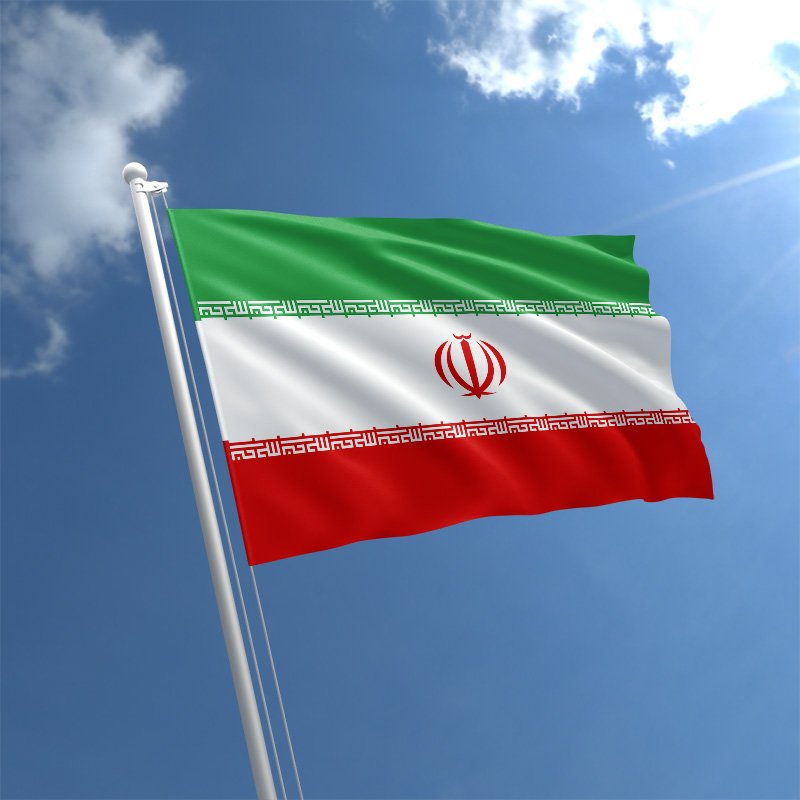
The real-world event driving this market is the recent breakthrough in US–Iran negotiations, culminating in the Islamabad Memorandum signed remotely on 17 June 2026, which established a 60-day ceasefire and opened talks on Tehran’s nuclear programme and the Strait of Hormuz[2]. Despite this diplomatic thaw, no US House member or Senator has publicly announced plans to visit Iran, and the current crowd-implied probability of 0% reflects the absence of any credible travel itinerary or official invitation[1].
Historically, high-level visits to Iran by US officials have been rare and typically preceded by explicit state announcements or multilateral mediation frameworks, such as the 2015 nuclear deal talks in Geneva. Comparable cases show that even during periods of reduced hostilities, physical entry remains contingent on security guarantees and formal diplomatic channels, which are still being negotiated under the 60-day ceasefire window[2][3]. The lack of such commitments explains the market’s zero probability.
Traders should monitor upcoming announcements from the White House regarding Vice President JD Vance’s delayed trip to Switzerland, as any shift in his schedule could signal broader US engagement with Iran[7]. Additionally, watch for statements from Iranian Foreign Minister Abbas Araghchi following his recent summit in Switzerland, which may indicate willingness to host US officials[5]. Recent reports confirm that negotiations concluded in Switzerland with constructive outcomes, but no visit has been confirmed yet[4].
This market operates under a regulatory framework influenced by German GlüStV implications and US CFTC reach, which govern the accessibility of prediction markets for retail traders. The “no-KYC up to $1,500” threshold allows users to trade without identity verification, enhancing accessibility while remaining compliant with international KYC standards. These rules ensure the market remains open to a global audience without compromising regulatory integrity.
Methodology
This page reviews Who will enter Iran by June 30? across five venues. We show live odds for Polymarket-based markets (sourced from the Polygon order book); for other venues we list platform attributes, since the comparable contracts are not exposed via a public API on every venue. Every CTA points at PolyGram — the application we operate, where you trade directly against the Polymarket order book at 0% fees.
Resolution & payout
At resolution the UMA oracle takes over: a proposer posts the outcome with a bond, any token holder can dispute within two hours. Without dispute the result is accepted and the smart contract distributes USDC instantly.
On Kalshi (CFTC-regulated) resolution runs through their in-house clearing engine in USD. Betfair Exchange settles after match end in the account's local currency. Manifold pays no cash — only its in-platform "mana" currency.
FAQ
- How does resolution work?
- Through the UMA Optimistic Oracle on Polygon: a proposer submits the outcome, a two-hour challenge window opens, and USDC payouts settle automatically once the result is final.
- What's the difference between YES and NO shares?
- A YES share pays $1.00 if the event happens, $0 otherwise. A NO share pays $1.00 if the event doesn't happen. The market price between 0¢ and 100¢ is the implied probability.
- How fast are USDC deposits?
- Polygon credits deposits after 12 confirmations — usually under 30 seconds. Withdrawals follow the same path and land back in your wallet within minutes.
- Do I need to KYC for this market?
- Not under $1,500 of lifetime trading volume. Above that threshold, PolyGram triggers a quick verification flow that finishes in minutes.
- How reliable are the quoted odds?
- The YES/NO percentages are the live mid-prices of the Polymarket order book. On deep markets they move every few seconds; on thinner ones you'll see short plateaus.
%22%2F%3E%3Cpath%20d%3D%22M%206%2066%20A%2026%2026%200%200%201%2058%2066%22%20fill%3D%22%23E6B98D%22%20opacity%3D%220.9%22%2F%3E%3Ccircle%20cx%3D%2232%22%20cy%3D%2226%22%20r%3D%2222%22%20fill%3D%22%23F5CBA7%22%2F%3E%3Cpath%20d%3D%22M%2010%2026%20A%2022%2028%200%200%201%2054%2026%22%20fill%3D%22%237c3aed%22%20opacity%3D%220.9%22%2F%3E%3C%2Fsvg%3E) and
and%22%2F%3E%3Cpath%20d%3D%22M%206%2066%20A%2026%2026%200%200%201%2058%2066%22%20fill%3D%22%23E6B98D%22%20opacity%3D%220.9%22%2F%3E%3Ccircle%20cx%3D%2232%22%20cy%3D%2226%22%20r%3D%2222%22%20fill%3D%22%23F5CBA7%22%2F%3E%3Cpath%20d%3D%22M%2010%2018%20Q%2016%204%2026%2010%20Q%2020%202%2032%206%20Q%2044%202%2038%2010%20Q%2048%204%2054%2018%22%20stroke%3D%22%237c3aed%22%20stroke-width%3D%224%22%20fill%3D%22none%22%20stroke-linecap%3D%22round%22%2F%3E%3C%2Fsvg%3E)
Trade Who will enter Iran by June 30? on PolyGram
Live order book, 0% fees, USDC settlement in seconds.
Trade on PolyGram →