Platform comparison
| Platform | YES odds | NO odds | Fee | KYC | Settlement | |
|---|---|---|---|---|---|---|
PolyGram Pick polygram.ink |
0% | 100% | 0% (USDC on-chain) | No-KYC up to $1,500 | USDC, auto via UMA oracle | Open on PolyGram → |
Polymarket polymarket.com |
0% | 100% | 0% | Geo-blocked in US/UK/EU | USDC, on-chain | Open on PolyGram → |
Kalshi kalshi.com |
— | — | Up to 7% per trade | US-only, KYC required | USD | Open on PolyGram → |
Betfair Exchange betfair.com |
— | — | 2-5% commission | Full KYC from first trade | GBP / EUR | Open on PolyGram → |
Manifold Markets manifold.markets |
— | — | Play-money (mana) | None — play-money | Mana (no cash-out) | Open on PolyGram → |
Live odds for Polymarket-based markets come from the Polygon order book. Non-Polymarket venues show attributes only; clicking any row opens the market on PolyGram.
Active sub-markets
Market context
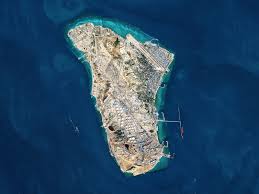
Kharg Island remains firmly under Iranian sovereignty, serving as the nation’s primary oil terminal and handling roughly 90% of its crude exports, which explains the current crowd-implied probability of 0% for any loss of control by March 2026[1][3]. Despite recent US bombing campaigns in March 2026 that targeted military storage and naval facilities on the island, Iranian state media confirmed oil exports continued uninterrupted, and no ground occupation occurred[4][5]. The island’s strategic concentration risk makes it a vital economic lifeline, yet its heavy fortification and the legal complexities of invading civilian infrastructure with 8,000 civilians present deter full seizure attempts[1][3].
Historically, comparable cases such as the 1980s US–Iran tanker wars or the 2003 Iraq invasion show that temporary bombardment rarely equates to permanent loss of territorial control unless accompanied by sustained ground occupation and international recognition of a new authority[1][4]. Traders should monitor official announcements from the US Command regarding potential ground troop deployments, scheduled reviews of the Strait of Hormuz blockade status, and any shifts in diplomatic backing from China or regional allies[4][7]. A recent Axios report citing informed sources indicates the current administration is contemplating strategies to occupy or blockade the island, but no public confirmation of ground deployment has been issued, keeping the probability of control loss negligible[4].
From a regulatory perspective, this market’s accessibility is shaped by German GlüStV implications and US CFTC reach, particularly regarding platforms offering no-KYC trading up to $1,500, which may limit participation for users in jurisdictions with strict KYC mandates[1]. While temporary raids or naval presence offshore do not qualify as loss of control under the market’s terms, traders must distinguish between isolated disruptions and genuine shifts in governmental authority[4]. The settlement window ending March 31, 2026, requires sustained evidence of another state or internationally backed authority establishing primary control, a scenario currently unsupported by available intelligence[5].
Methodology
This page is a comparison snapshot: one live quote (Polymarket), four reference venues with their key attributes, and a single execution path — every trade button routes to PolyGram, which mirrors the Polymarket order book directly.
Resolution & payout
Settlement runs on-chain. Polymarket's contract logic separates YES and NO shares as conditional tokens; at resolution the winning share lifts to $1.00 and the losing one to $0. The outcome input comes from the UMA Optimistic Oracle, which secures against bad resolution with a bond + dispute window.
Once finalised, the smart contract pays USDC to the holders' wallets within minutes — no withdrawal fees beyond Polygon network gas. Kalshi settles in USD via CFTC clearance, Betfair in account currency net of commission, Manifold in play-money mana with no cash-out.
FAQ
- Where can I trade this market with the lowest fees?
- On PolyGram, which mirrors the Polymarket order book at 0% fees. Kalshi charges up to 7% per trade; Betfair Exchange takes 2-5% commission on net winnings.
- What's the difference between YES and NO shares?
- A YES share pays $1.00 if the event happens, $0 otherwise. A NO share pays $1.00 if the event doesn't happen. The market price between 0¢ and 100¢ is the implied probability.
- What does it cost to trade on PolyGram?
- Zero. PolyGram routes every order to the live Polymarket order book; the only cost is the Polygon network fee, typically under $0.01 per transaction.
- How fast are USDC deposits?
- Polygon credits deposits after 12 confirmations — usually under 30 seconds. Withdrawals follow the same path and land back in your wallet within minutes.
- How reliable are the quoted odds?
- The YES/NO percentages are the live mid-prices of the Polymarket order book. On deep markets they move every few seconds; on thinner ones you'll see short plateaus.
%22%2F%3E%3Cpath%20d%3D%22M%206%2066%20A%2026%2026%200%200%201%2058%2066%22%20fill%3D%22%23E6B98D%22%20opacity%3D%220.9%22%2F%3E%3Ccircle%20cx%3D%2232%22%20cy%3D%2226%22%20r%3D%2222%22%20fill%3D%22%23F5CBA7%22%2F%3E%3Cpath%20d%3D%22M%2010%2026%20A%2022%2028%200%200%201%2054%2026%22%20fill%3D%22%237c3aed%22%20opacity%3D%220.9%22%2F%3E%3C%2Fsvg%3E) and
and%22%2F%3E%3Cpath%20d%3D%22M%206%2066%20A%2026%2026%200%200%201%2058%2066%22%20fill%3D%22%23E6B98D%22%20opacity%3D%220.9%22%2F%3E%3Ccircle%20cx%3D%2232%22%20cy%3D%2226%22%20r%3D%2222%22%20fill%3D%22%23F5CBA7%22%2F%3E%3Cpath%20d%3D%22M%2010%2018%20Q%2016%204%2026%2010%20Q%2020%202%2032%206%20Q%2044%202%2038%2010%20Q%2048%204%2054%2018%22%20stroke%3D%22%237c3aed%22%20stroke-width%3D%224%22%20fill%3D%22none%22%20stroke-linecap%3D%22round%22%2F%3E%3C%2Fsvg%3E)
Trade Kharg Island no longer under Iranian control by 2026? on PolyGram
Live order book, 0% fees, USDC settlement in seconds.
Trade on PolyGram →